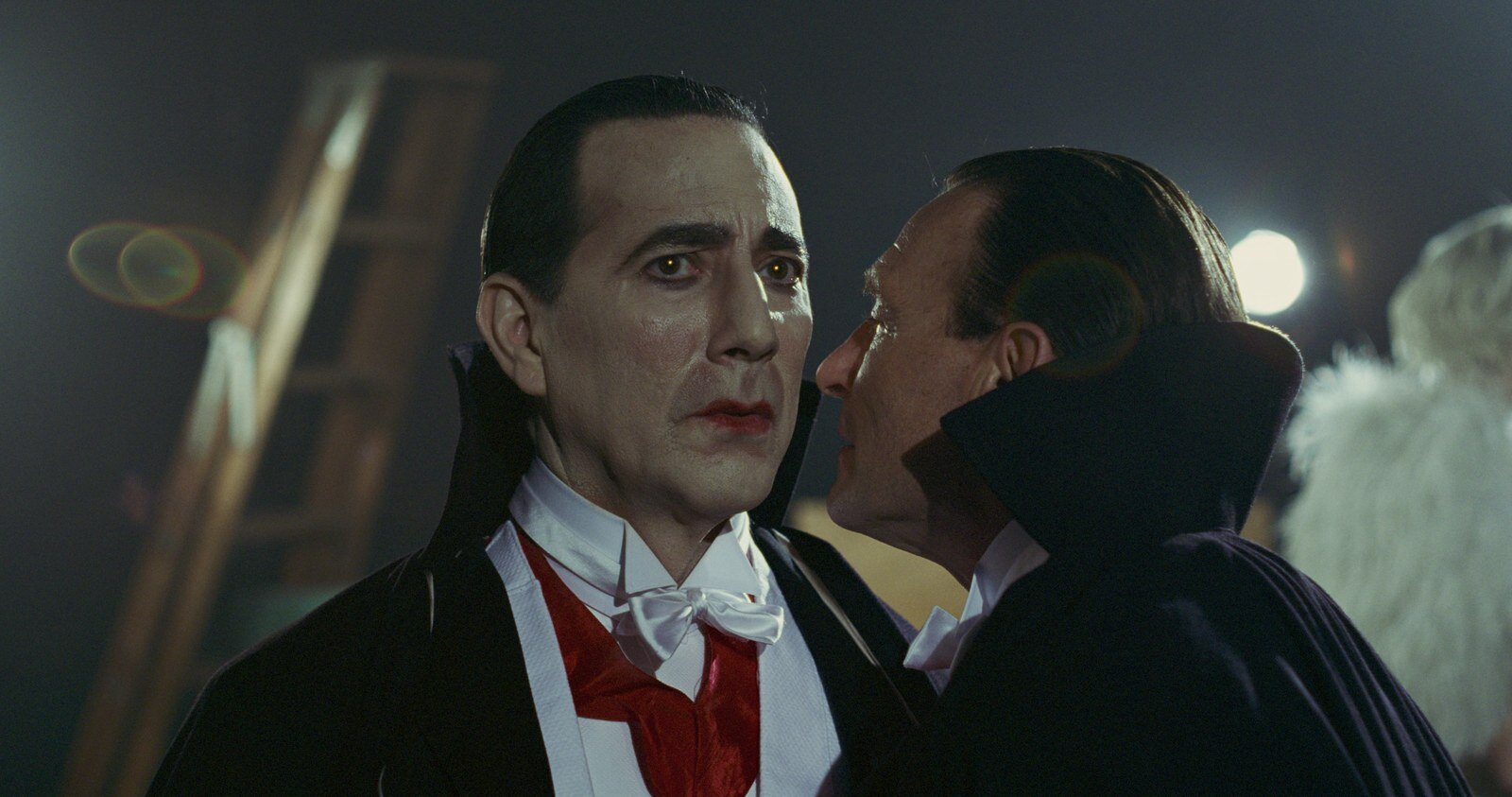
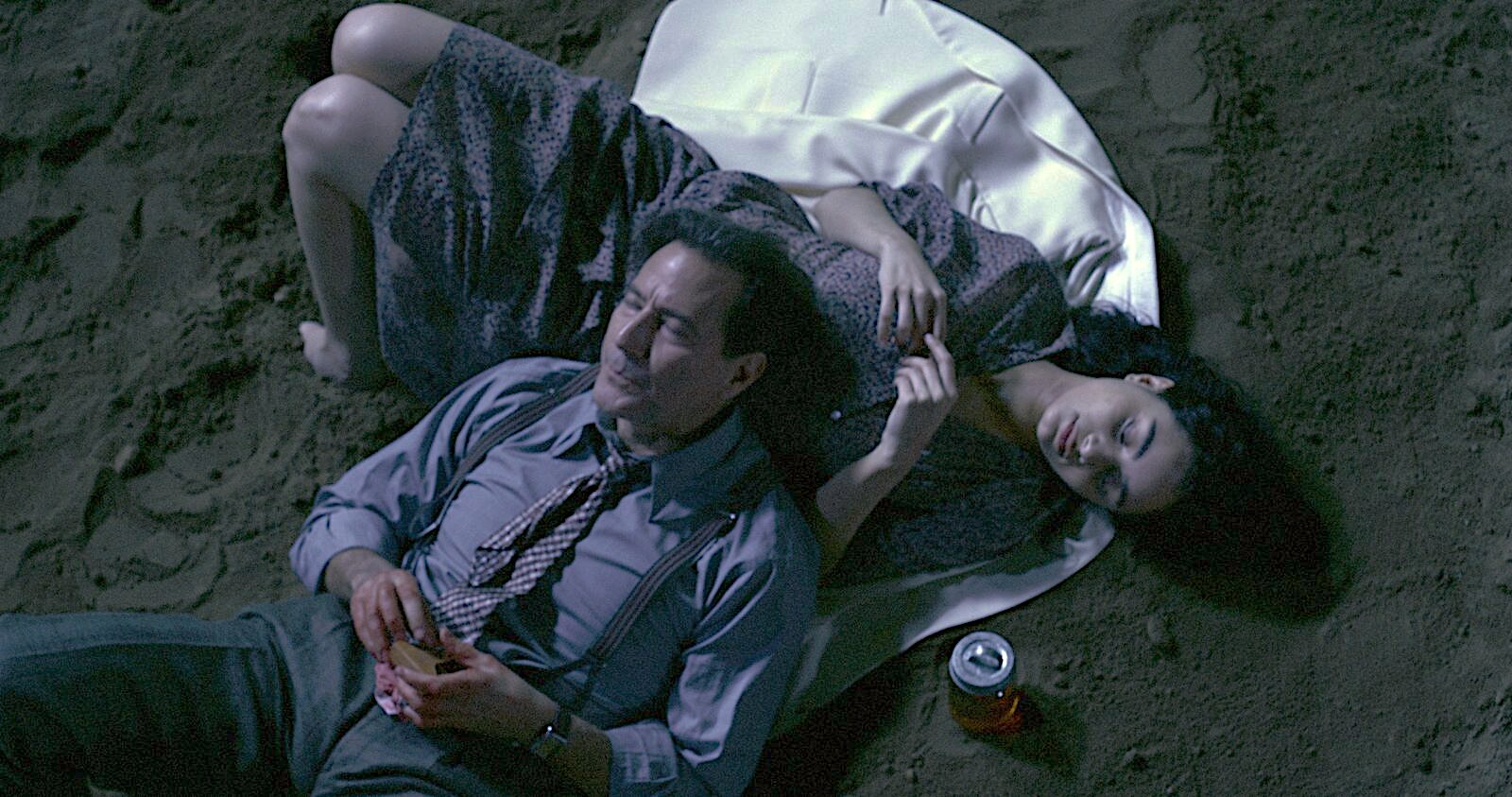
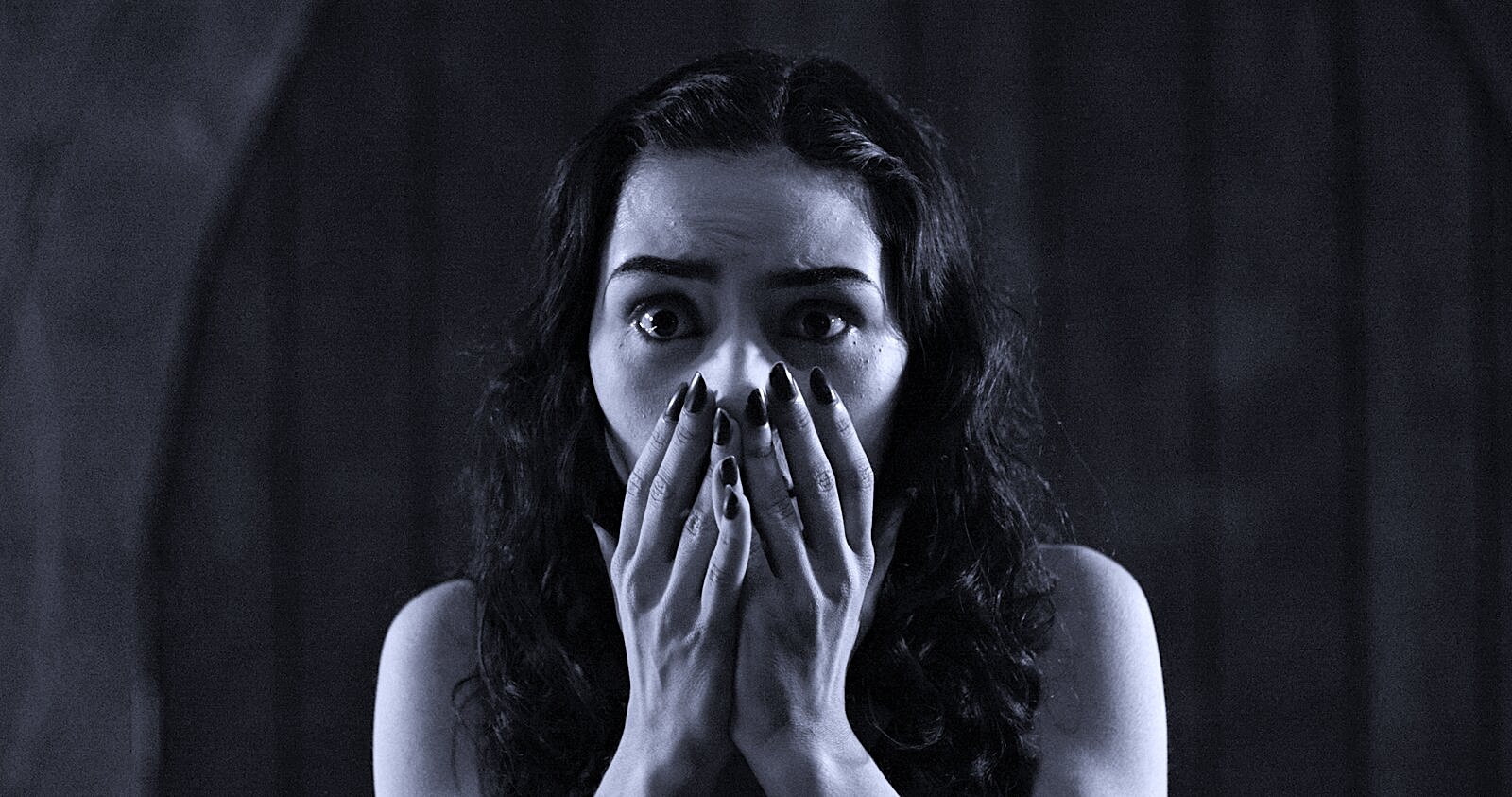
In 1930s Hollywood, a fading Spanish actor is hired not to create a vampire, but to mimic one — and on the same darkened sets where two vampires are shot in two languages, the line between performance and possession begins to bleed away.
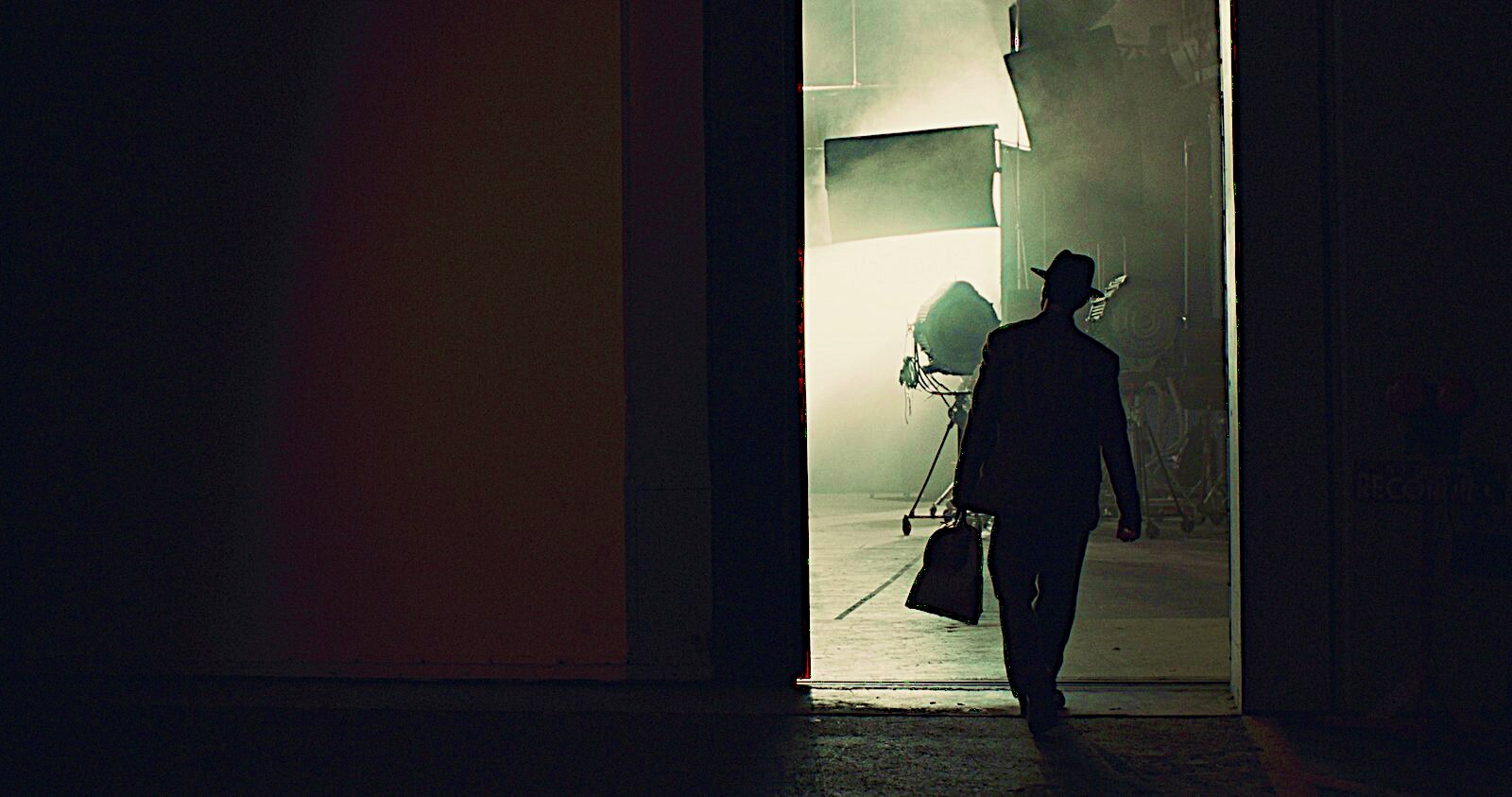
In 1930 Hollywood, as silent films give way to talkies, two immigrant actors clash over a role that promises more than fame — it offers immortality. Luis de Ossario, a Spanish actor past his prime, arrives on set to play Count Vlad in a Spanish-language vampire film. But he quickly learns he's not the star — he's a mimic. To satisfy international markets, the studio is producing two movies from one script, shooting on the same sets, but in a different language and with a different cast and crew. Kürt Orlov, a magnetic Romanian, leads the English version by day; while Luis, relegated to the night shift, is pressured into imitating Orlov's theatrical gestures while his own darker, more psychological interpretation is dismissed.
Both men are exiles — transplanted to Los Angeles with dreams of legacy. Luis has gone into debt crafting custom fangs inspired by Bram Stoker, believing in a Vlad drawn from inner torment. Orlov, who escaped Bucharest by cozying up to Bolsheviks, plays Vlad as pure spectacle. Their rivalry is not just artistic — it's existential.
Vianca Segura, a convent-raised orphan with a mysterious past, becomes the film's unexpected muse. Discovered by the film's director, she's never acted before, but her haunted presence captivates both men. She idolizes Luis from old fan magazines, calling him “The Spanish Sheik.” Her connection to Aztec vampire mythology — especially La Cihuateteo, the undead mother — deepens the film's eerie undertones.
As production unfolds in parallel — two casts, two crews, forbidden to interact — reality begins to unravel. Murders plague the studio. A young woman is found drained of blood, a soup ladle beside her. Luis begins experiencing blackouts, waking covered in blood. Sister Aubrey, a nun tending to Vianca, feeds Luis honey that may not be honey at all. The gothic imagery of the film bleeds into life, and Luis can no longer tell where performance ends and possession begins.
When Luis finally performs his version of Vlad — raw, haunted, real — even Orlov is shaken. But Orlov, fearing competition, threatens to have the studio fire Luis unless he self-sabotages his own performance. With censorship looming and the killer still at large, Luis must confront whether Vianca is the innocent he believes her to be, or something far more dangerous. Has he fallen in love, or under a spell? And in fighting to escape Orlov's shadow, has he become the very monster he was hired to portray?
Los Vampires is a gothic meditation on immigrant identity, artistic rivalry, and the seductive danger of performance. Set during Hollywood's volatile transition to sound, it explores how cinema preserves us — not as people, but as ghosts. It's a story of those who worked the night shift, spoke the wrong language, and dared to create something eternal, even if the price of immortality was more terrible than they imagined.
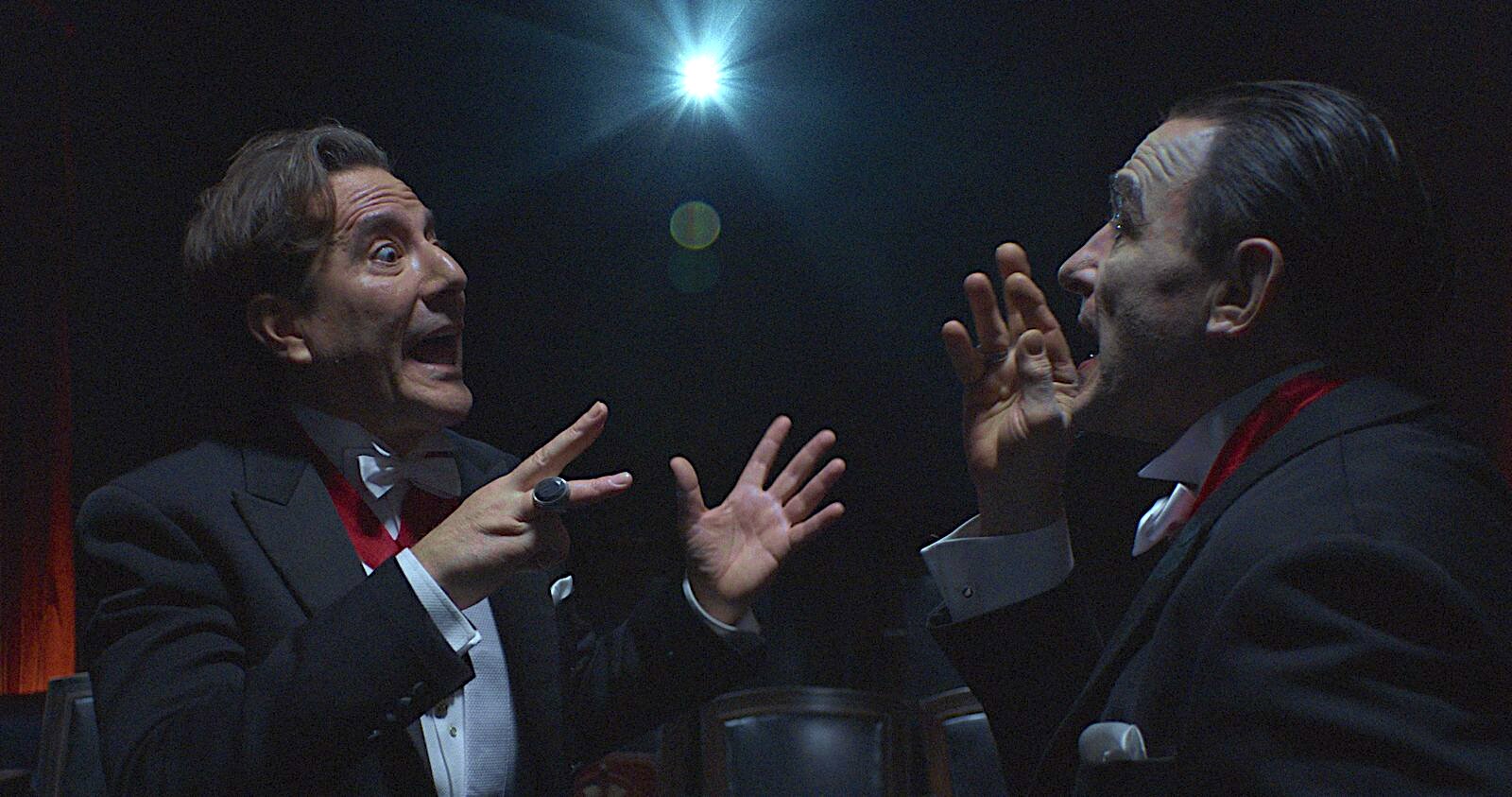
The title first struck me when I discovered the true story of the Spanish-language version of Dracula, shot on the same sets and from the same script as Universal's 1931 classic. Their production began at dusk and ended at dawn, the working hours of vampires. That detail alone felt cinematic, eerie, and strangely poetic.
As a writer working in Hollywood, I have long been aware of the bloodsucking nature of the business. It is something most artists face, especially those trying to hold on to a personal vision or a sense of integrity. Every day, in ways large and small, one is asked to compromise, to conform, to sell a piece of oneself. That tension became the heart of this film.
The real history only deepened that idea. During my research, I learned that Carlos Villarías, who played the Count in the Spanish-language production, was instructed to watch Bela Lugosi's dailies so that he could mimic his performance. He was not being asked to create his own interpretation, but to replicate someone else's. In that dynamic, I found the dramatic spark of the story. Character, for me, comes alive through friction, and this relationship gave the film its fire.
I was never interested in making a straightforward behind-the-scenes period piece. I wanted to push the material toward something more haunted, more psychological, and more mythic. Cinema, to me, is visual first. Images create the web in which ideas are caught and take shape. From the beginning, I imagined the film through photography, atmosphere, and production design, drawing inspiration from the visual language of vampire cinema and from filmmakers like Dreyer, Murnau, Herzog, and Polanski.
Despite how he is depicted in the film, I consider Bela Lugosi a genius, and an inspiration not only to Carlos Villarías, but to all of us. The greatest vampire films understand that our sympathy often lies with the undead. I took that as a guiding principle. In Los Vampires, the vampire commits no violence. The true savagery is human. It comes from insecurity, jealousy, ambition, and the corrosive power of envy. The contagion in this film is not blood, but desire.
Ultimately, the making of what became known as “The Spanish Dracula” was my final source of inspiration. Here was a group of migrant artists from Spain, Argentina, and Mexico, coming together in Hollywood to make something they loved and believed in, all in pursuit of a kind of immortality through cinema. That resonated deeply with me. The world still divides itself into us and them. With Los Vampires, I wanted to explore the community of outsiders who make art, the beauty and pain of that struggle, and the price they pay for it.
Los Vampires grows out of one of early Hollywood's strangest true experiments. In 1930, before dubbing technology existed, studios protected their foreign markets by shooting the same picture twice — first in English by day, then in another language by night, on the very same sets with a second cast and crew. The most famous of these phantom productions was Universal's Spanish-language vampire film, shot overnight on the same sets while Bela Lugosi's company slept. Its star, Carlos Villarías, was instructed to watch Lugosi's dailies and replicate the performance rather than create his own. That footnote of film history — artists working the vampire's hours, asked to surrender their own vision — is the seed of the film.
The production embraced the craft of the era it depicts. Los Vampires was filmed in fifteen days on the stages of MBS Media Center in Manhattan Beach, California, on practical 1930s soundstage sets built for the film by Strong Arm Sets. Period wardrobe was drawn from the Warner Brothers Costumes collection under costume designer Petra Larsen, and set dressing and props came from History for Hire, Omega Cinema Props, Independent Studio Services, and Universal Studios, among others. Make-up and effects were designed by Jennifer Aspinall, with production design by Ricardo Jattan and cinematography by Simon Coull. The film was produced with a SAG-AFTRA cast.
Performed in English and Spanish, the film was finished in DCI 4K with a 5.1 theatrical mix. Editing and sound design are by Evan Millard, color by Ethan Schwartz, and visual effects by Rick Shick and Makana Sylva. Josh Mancell's original score is threaded with La Llorona: star Daniela Couso performs the traditional song in the film and lends her voice to “Vianca's Theme.” Licensed recordings from the late 1920s round out the soundtrack.
The original score is composed by Josh Mancell and performed by Cary Berger (guitar), Tara Busch (vocals), Richard Dodd (cello), Mica Erin (violin), Larry Klimas (flute), and Mancell (drums, piano, guitar). Music supervision and clearance by Jennifer Lanchart / Syncalicious Music.
“Vianca's Theme,” written by Josh Mancell and based on the traditional La Llorona, features vocals by Daniela Couso (Instant Ranger Music, BMI). Couso and Alex Arango also perform La Llorona in the film, and Skip Heller's “Cast Party Csardas” is performed on screen by the film's gypsy band.
Licensed period recordings include “The Thrill Is Gone” and “Deep Night” (Rudy Vallee), “Tonight in the Moonlight” (The Morrie Morrison Orchestra), “Rolling Log Blues” (Lottie Kimbrough), “Twelfth Street Rag” (Phil Harris Orchestra), and “I'll Get By As Long As I Have You” (Nick Lucas).
| Runtime | 104 minutes |
| Picture | DCI 4K (4096 × 2160) · 1.90:1 Full Container · Color · 24 fps |
| Sound | 5.1 Surround (stereo available) |
| Screening Formats | 2D DCP (SMPTE) · ProRes 4444 master · H.264 screeners |
| Languages | English & Spanish · English subtitles available (SRT) |
| Shot At | MBS Media Center, Manhattan Beach, California |
| Year / Country | 2026 · United States |
| Copyright | © 2026 Los Vampires LLC. All Rights Reserved. |